EMOTIONAL INTIMACY

Close-up of a happy young couple

“People who are happily married like each other. If they did not, they would not be married ”(Gottman, 2015). But this does not mean that they do not do a constant job to stay that way. Each couple is unique, but what happily married couples have in common that they base their relationship on similar principles, including emotional intimacy (Beck, 1988).

The term intimacy comes from the Latin intimus, in relation to the innermost. Intimate, according to Peña-Marín (1989) refers to what unites closely by what is deeper (intimate relationships, intimate friend, intimate union). On the other hand, emotional intimacy refers to experiencing feelings of closeness. According to Martin (1994), this is known as love.

Likewise, intimacy, as defined by Dionne (1996) is a relationship of care without any pretext and a revelation of the members without risk of losing or winning for either. It is giving and receiving in an exchange that grows at the same time, which facilitates the awareness of oneself and the differences and similarities between the members. Intimacy creates and sustains acceptance while valuing uniqueness. Intimacy promotes continuity by keeping energy constant over time.

Intimacy begins when the same world is intentionally and deliberately shared: time, interests, feelings, thoughts, goals and ideals. To achieve this, couples must determine to spend time together and develop common interests that allow them to share them and get involved in them (Johnson, M. D., & Anderson, J. R. 2013).

A primary ingredient in emotional intimacy is friendship. Friendship (from Latin amicĭtas, by amicitĭa, from amicus, friend, which derives from loving) is an affective relationship between two or more people. Friendship is one of the most common interpersonal relationships that most people have in life.

Friendship is a key ingredient for a lasting marriage. Among the consequences of maintaining a good friendship with the couple in marriage are happiness, stability and the duration of relationships as a couple. So “those who genuinely consider their partner to be their best friend reach about twice as much satisfaction as their partner compared to others” (Johnson, M. D., & Anderson, J. R. 2013).


In today’s society, it is easier to leave a spouse than a friend. That is why it is important that marriage is built in a relationship of friendship since it has the guaranteed for a lifetime.

How to develop a relationship of friends with the spouse?

1. Sharing QUALITY TIME to be together, eat together and do activities together (do all things in mutual agreement) (Wilcox, 2005). Couples have to dedicate TIME and leave selfishness behind. Make the decision to make the commitment to start spending quality time to form a conjugal friendship.

2. Having an OPEN, transparent and honest COMMUNICATION (Beeke, J. R. 2017) .. Being open with a friend makes friendship grow in values, ideas, and their way of being in a transparent relationship. The same will happen with couples who practice it.

In marriage, friendship, as an affective relationship between two people, occurs exclusively. When the couple is married, it is very important that they redouble their efforts and be very careful in choosing whom they relate to, but even more importantly, how they relate to people of the opposite sex.

So here are some tips on how to maintain relationships with the opposite sex without affecting the friendship with our spouse:

1. Choose wisely with whom to spend time and avoid spending unnecessary time with someone of the opposite sex, for example, if you are looking for a personal trainer in the gym, it is better to choose the same sex.

2.- Share wisely, that is, no secrets, marital problems or intimacies are shared about oneself and marriage with someone other than the spouse.

3.- Try to be in a public place, never be alone with someone of the opposite sex and always with a third person.

4. Avoid being alone with a person of the opposite sex in a car, even for short journeys.

5. Pay attention to thoughts. If someone is thinking about someone other than the spouse and the spouses’ failures all day, it is important that a therapist be asked for help.

6.- No to comparisons. Comparing the spouse with a new acquaintance can cause the spouse’s qualities to be disregarded and the defects highlighted.

Activity: Evaluation questions about friendship with the spouse.

– Do you consider your spouse to be a personal friend?

– Do you believe that you are able to trust your spouse with anything?

– What are the feelings that take you away or bring you closer to your spouse?

– How do you express yourselves? In a way that you feel, are, and live like true friends?

– What is the difference in friendship with your spouse and friendship with any other person?

– Is a person of the opposite sex a friend more than your spouse?

We could add more questions although these can give an accurate answer to reality.

Don’t forget to give our opinion in this link. https://byui.az1.qualtrics.com/jfe/form/SV_9SjnPyoBVTZskzX

REFERENCES

Beck T.,  Aaron (1988) Con el amor no basta, Editorial Paidós, México.

Beeke, J. R. (2017). Nurturing intimate communication with your spouse. Puritan Reformed Journal9(1), 265–278. Retrieved from https://search-ebscohost-com.byui.idm.oclc.org/login.aspx?direct=true&db=rlh&AN=120832245&site=eds-live

Dionne, Martha (1996) Intimidad y estilos atributivos en diferentes etapas del matrimonio.  Tesis inedita de licenciatura. Universidad de las Americas, Puebla.

Gottman, J. M., & Silver, N. (2015). The seven principles for making marriage work : a practical guide from the country’s foremost relationship expert (Vol. [Second edition]). New York: Harmony. Retrieved from https://search-ebscohost-com.byui.idm.oclc.org/login.aspx?direct=true&db=nlebk&AN=840107&site=eds-live

Institute for American Values, 2005 Why marriage matters, second edition: twenty-six conclusions from the social sciences Family Scholars 44 pages https://irpcdn.multiscreensite.com/64484987/files/uploaded/Why-Marriage-Matters-Third-Edition-FINAL.pdf

Johnson, M. D., & Anderson, J. R. (2013). The longitudinal association of marital confidence, time spent together, and marital satisfaction. Family Process, 52(2), 244–256. https://doi-org.byui.idm.oclc.org/10.1111/j.1545-5300.2012.01417.x

Peña -Marín, C (1989) El discurso de la intimidad. En C. Castilla del Pino (Ed), De la intimidad (77-96). Barcelona: Grijalbo.Retrieved from https://es.scribd.com/document/239224142/Intimidad-y-Comunicacion

.

MONEY MATTERS

Apparently the well-known marriage phrase «in wealth as in poverty» is becoming less significant in our society. According to a survey of divorced and separated individuals, the third most common factor for which couples divorce is economic problems with 48%, preceded by lack of commitment and communication problems (CARA, Marriage in the Catholic Church: A Survey of U.S. Catholics,). Another recent study affirmed that divorce is preceded by bad effects on marital harmony and the frequency of sexual relations (Gillespie BJ, Peterson G, Lever J 2019) caused by injustices in finance.

This is a really alarming issue and in many marriages problems occur when money becomes more important than the relationship. Individuals associate money with powerful meanings and emotions (Kenney, C. T. 2006). To eliminate divisions in marriage caused by money, the relationship should always be the priority: money comes later. As long as it doesn’t come first, Individuals may link money with powerful goals and needs such as success, security, love, and esteem ( Kenney, C. T. 2006). 

But how do couples keep from being part of the statistics?

1.      Understand that each culture and family is different.

When a couple marries, not only does their life unite with that of the couple; but they also link customs, family ties, beliefs, fears, etc. Melding both lives means couples must make compromises. On the surface, the different in learning customs of one person may appear that they are better at managing money than the other; however, that may not be the case.  They are simply two different ways of doing things. Once the couple manages to identify how each person manages money, they can understand the separate ways, evaluate them, and modify whatever is necessary.

2.  It’s OUR money.

Many couples manage their separate finances. This can cause a number of problems for money in marriage (Vogler, Lyonette, Wiggins 2008). Although many couples are taught to have separate finances in marriage, there are studies that prove that joining finances in a bank account only avoids many problems and leads to better results. (Vogler, Lyonette, Wiggins 2008) Satisfaction with the decision of expenses and happiness in general is associated with this factor.

3. Establish a budget as a couple.

Making a budget as a couple can avoid many problems over money in marriage. The most gratifying thing about putting the couple’s relationship before their relationship with money is that together they are better equipped to plan the future (Vogler, Lyonette, Wiggins 2008). The money is there, now the couple can determine what they are going to do with it. When a couple gets used to talking about money, the next natural step is to want to set goals.

The first step and most important things is to create a budget together so the couple can determine how much money is brought into the home and what is spent. The budget can help identify areas where expenses can be cut to achieve other goals: for example, buying a house, starting a retirement savings fund, going on a trip, etc.

In the article «How to make a family budget» from US News (2019. April) eight unmissable steps are listed for couples to consider when making a budget:

–.Bring both partners together.

— Track income and expenses.

— Evaluate your current situation.

— Trim costs.

— Build savings.

— Get out of debt.

— Lower your taxes.

— Check in frequently.

Another good way to start a family budget is by using David Ramsey’s percentage recommendations (David Ramsey, 1992) Ramsey’s 11 budget categories, along with the percentages, are:

  • Giving — 10%
  • Saving — 10%
  • Food — 10% to 15%
  • Utilities — 5% to 10%
  • Housing costs — 25%
  • Transportation — 10%
  • Health — 5% to 10%
  • Insurance — 10% to 25%
  • Recreation — 5% to 10%
  • Personal spending — 5% to 10%
  • Miscellaneous — 5% to 10%

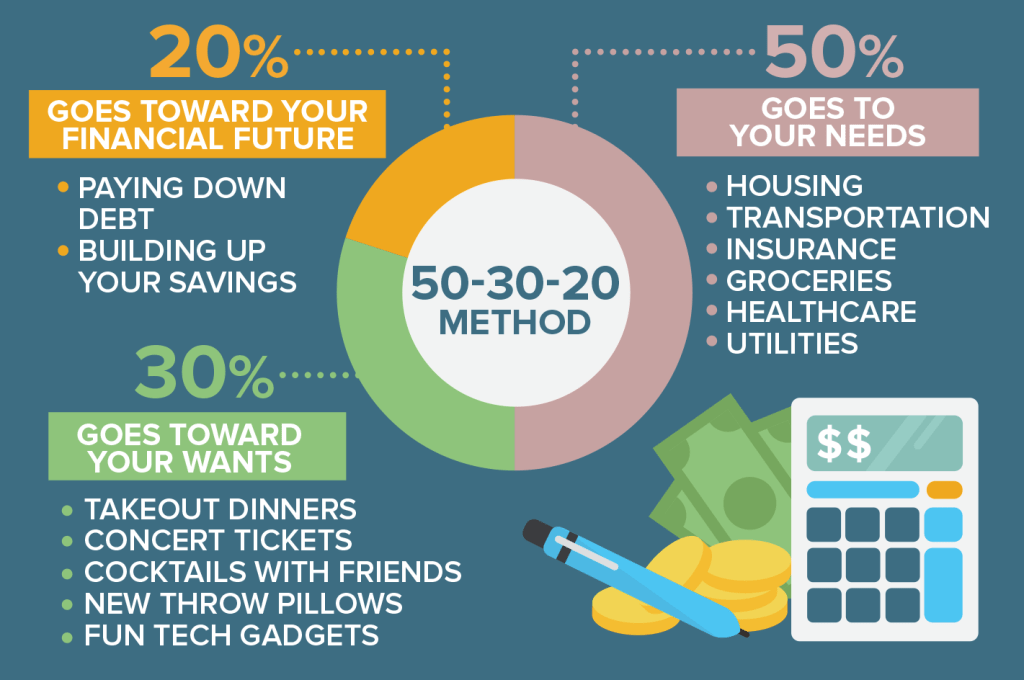
In a nutshell, the 50/30/20 budget is split up into:

  • 50% toward primary expenses (“needs” like housing, transportation, and food)
  • 30% toward secondary expenses (“wants” like a gym membership, Netflix subscription, or phone plan)
  • 20% toward savings or investing 

According to this information the couples are invited to fill out the following format taken from the book “One For the Money-Guide to Family Finance” by Elder Marvin J. Ashton.

Conclusion

If a couple has problems with money, the best thing they can do is have an honest conversation. The issue of money is difficult because it can be very emotional. In addition, each person has different ideas on how to manage it.

The truth is that when a couple marries, they have to learn to identify those lessons that affect their perception of how money should be managed. This will allow them to have informed discussions and reach mutual agreements.

Don’t forget to give our opinion in this link. https://byui.az1.qualtrics.com/jfe/form/SV_9SjnPyoBVTZskzX

REFERENCES

CARA, Marriage in the catholic church: a survey of u.s. catholics (2007) p. 100-101.

Dave Ramsey(1992Financial peace revisited: new chapters on marriage, singles, kids and families

 Gillespie BJ, Peterson G. Lever J. (2019). Gendered perceptions of fairness in housework and shared expenses: Implications for relationship satisfaction and sex frequency. PLoS ONE 14(3): e0214204. https://doi.org/10.1371/journal.pone.0214204

How to Make a Family Budget. (2019, April 18). USNews.com. Retrieved from https://link-gale-com.byui.idm.oclc.org/apps/doc/A582875890/STND?u=byuidaho&sid=STND&xid=46ad8224

Kenney, C. T. (2006). The power of the purse: Allocation systems and inequality in couple households. Gender & Society20, 354–381.

Money, power and spending decisions in intimate relationships Carolyn Vogler Clare Lyonette Richard D. Wiggins 15 February 2008 https://doi.org/10.1111/j.1467-954X.2008.00779.x

Quality time.

The hectic life, the excess of work and the arduous routine are some of the causes for couples to spend less time together. Many times the relationship is taken for granted and they stop trying to make a space to share with the couple the talks, moments and laughter that were frequent in the courtship.

Healthy marriages are not only sharing time together because they are happy but because they like their partner’s company, enjoy that common space and have  marital satisfaction (Johnson, M. D., & Anderson, J. R. 2013). Generally, most couples prefer to keep distance when there is friction and when everyday life becomes boring and tedious. In contrast to this, healthier and better-linked couples, despite having emotional problems or injuries, solve everything by spending more time together (Sanford, K. 2006).

The big secret of spending time together, both consciously and unconsciously is to keep working on your friendship and to not take it for granted. It is illustrated  in the study conducted by Dr. Wilcox of the University of Virginia (2005) to married couples where he found that those couples who spent some time talking or sharing an activity at least once a week showed a trend 5 times more likely of being «happier» in their marriages than those who did not.

In several studies, the time that couples spend together has been related to marital satisfaction (Johnson, M. D., & Anderson, J. R. 2013). When couples have regular dates show that their marriage is their priority and that results in a stronger marriage. So for those who want to learn to spend quality time and foster a friendship with their partner, to improve their relationship here is shared the following:

Best friend:

Related image

Who is happily married looks at his partner as the best and closest of his friends, a friend who wants to keep close no matter what (BEEKE, J. R. (2017). It’s funny how many couples strive to maintain the rest of their friendships. They make a space to have a coffee without letting all the problems get in the way, why often the same cannot be done with the husband? Why not forget the phrase: «I don’t have time, my love, another day»

Quality spaces:

Image result for couple playing board game

Marriages need those spaces of quality, not just quantity. The moments that are shared are times to connect, pay attention and know-how they have been. In these quality spaces, talk about each other, focus on each other without diverting attention from the relationship (Doherty, William J., 2001).

Do things together:

Image result for couple cooking together

Many marriages are in the same house and do not share mealtimes, do not watch programs in common or coincide in their schedules. Those spouses live together as strangers. Unlike them, couples who have their marriage as a priority do things together regardless of the simplicity of the actions (Carraway, A., & Carraway, B. (2017). One wife said that for her, having coffee with her husband on Sunday morning reading the newspaper was something she loved. This made her feel that they were connected.

Dr. William Doherty, PHD Family Social Science University of Minnesota shares 10 commandments for dating your spouse ( Zeig, J. K., & Kulbatski, T. 2012) that seems very interesting and helpful.

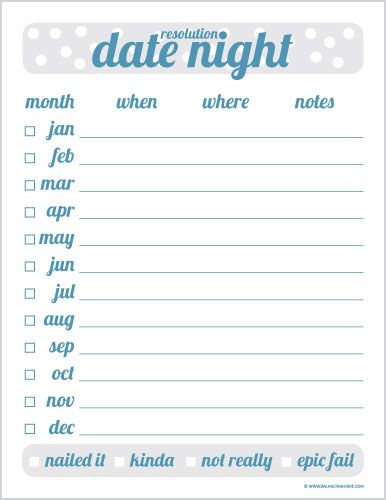
So here is a list of ideas for date night for couples and a calendar to schedule at least one monthly date.


DATE NIGH IS CHEAPER THAN DIVORCE


Don’t forget to give our opinion in this link. https://byui.az1.qualtrics.com/jfe/form/SV_9SjnPyoBVTZskzX

REFERENCES

BEEKE, J. R. (2017). Nurturing Intimate Communication with Your Spouse. Puritan Reformed Journal9(1), 265–278. Retrieved from https://search-ebscohost-com.byui.idm.oclc.org/login.aspx?direct=true&db=rlh&AN=120832245&site=eds-live

Carraway, A., & Carraway, B. (2017). Cheers to eternity : lessons we’ve learned on dating and marriage. Springville, UT: CFI. Retrieved from https://search.ebscohost.com/login.aspx?direct=true&db=nlebk&AN=1793471&site=ehost-live

Doherty, William J., (2001). Take back your marriage: sticking together in a world that pulls us apart. New York: Guilford.

Johnson, M. D., & Anderson, J. R. (2013). The longitudinal association of marital confidence, time spent together, and marital satisfaction. family process52(2), 244–256. https://doi-org.byui.idm.oclc.org/10.1111/j.1545-5300.2012.01417.x

Sanford, K. (2006). Communication during marital conflict: When couples alter their appraisal, they change their behavior. Journal of Family Psychology, 20(2), 256–265. https://doi.org/10.1037/0893-3200.20.2.256

Institute for American Values, 2005 Why marriage matters, second edition: twenty-six conclusions from the social sciences Family Scholars 44 pages https://irpcdn.multiscreensite.com/64484987/files/uploaded/Why-Marriage-Matters-Third-Edition-FINAL.pdf

 Zeig, J. K., & Kulbatski, T. (2012). Ten commandments for couples: For every aspect of your relationship journey. Phoenix, Ariz: Zeig, Tucker & Theisen.

How to deal with conflicts in marriage.

Nobody said that marriage was easy. Anyone who has been married for many years knows this. At first, everything is fantastic, everything is beautiful! Everything is so beautiful and so fantastic that the couple desires to spend much more time with each other; but then they discover that the more time they spend together, the more “defects” they find with each other. Their differences in opinion become more apparent and numerous.

Having differing opinions or views is normal. Having conflicts is a natural part of the human condition. It reflects that the people care about their points of view, priorities, and values; but when in conflict one must learn to handle them with respect and grace. Negative consequences of conflicts are avoidable. Since conflicts go from anger, anxiety, stress, and sadness to divorce (McCormick 2017),  obtaining tools to deal with conflicts more effectively is paramount.

There are many factors in marital conflicts, according to a study that was conducted in the city of Nuevo León, Mexico. The study indicates that the three main factors of marital conflicts are: lack of understanding, lack of communication, and incompatibility of characters. These are rather structural in nature. Or in other words, as defined by the American Dr. John Gottman (Gottman, 2015) «soluble» and «insoluble.»

There is a recent study also by Dr. Gottman (Gottman, 2015) where four behaviors were detected that, when observed in a couple, were safe predictors of divorce. These, called by Gottman are «The 4 Horsemen of the Apocalypse»:

1. Contempt

Much more serious than disgust, it is contempt that becomes superior. It is to look at the other as below oneself and to feel better than, more intelligent than, more sensitive than the other. When the couple communicates from contempt, they are sarcastic, mocking, disrespectful, and even cruel.

2. Criticism

There is a difference between telling your partner, «When you do not arrive at the time you promised, I feel very distressed. I worry that something bad has happened to you,»  and saying, «I cannot trust you. You never keep your promises. You do not even care if I worry about you. You only care about yourself.” A disagreement can be expressed, even a complaint, but the criticism is especially harmful because the person is labeled and judged negatively.

 3. Defensiveness

 This attitude denies the responsibility in the conflict; and therefore, does not assume its part in learning or changing to solve it. «Being on the defensive,» normally, brings with it disrespectful attitudes toward the other; since it considers that it was the other who started the conflict. Being on the defensive only causes problems to grow and not reach resolution. Gottman highlights the importance of the responsibility of each member of the couple to take charge of the situation and solve it in the best possible way.

4. Stonewalling

Stonewalling represents the fourth and last horseman. Stonewalling is when a couple’s discussion ends when one of the two is silent, pulls out a cell phone and starts playing/browsing/watching videos, or where one or both of them withdraw from the discussion, close in on themselves, and leave the other out. Running away from problems only allows them to accumulate, further increasing the hurt feelings of those who feel rejected, ignored or despised.

What to do?

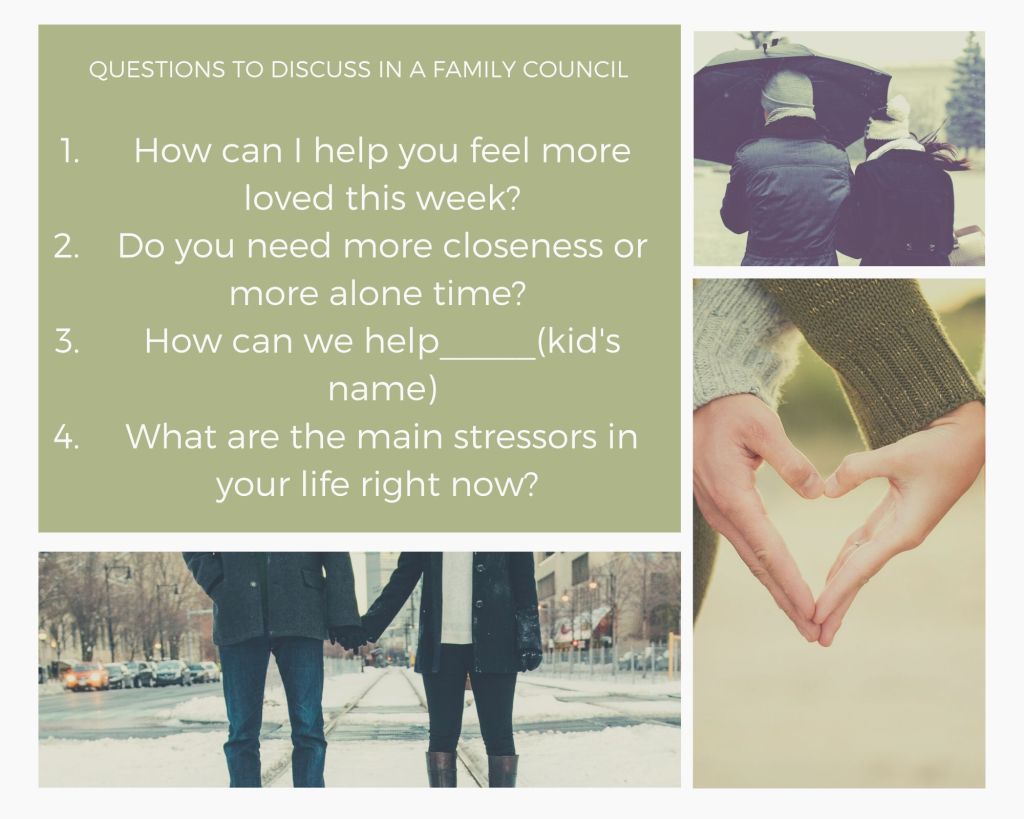
What can a couple do to resolve conflicts effectively? First, avoid these 4 Horsemen.  Second, talk about these differences in family council.

The concept of “family council” since 1949 is found in the Philippine Civil Code in Title VII, Chapter 3, Articles 242 to 244 in which it says, “the Court of First Instance may, upon application of any member of the family, a relative, or a friend, appoint a family council, whose duty it shall be to advise the court, the spouses, the parents, guardians and the family on important family questions”.(2019)

A family council is a meeting on any day of the week (Ballard, 2016) that aims to help its members to be more sensitive to the needs and interests of others; to set goals and to evaluate individual progress; create an atmosphere of respect, understanding, order, and harmony; and help couples formulate family plans and goals.

Ballard, in his book called Counseling with Our Councils (Ballard 1997) states that family councils «can contribute to order at home, offer a means to heal hurt feelings… and create an opportunity to teach.» In this same book, he mentions some steps to consider when making a family council:

1. Schedule the family council and report on the issues that will be discussed.

2. Begin the council with words of appreciation.

3. Talk about the issues with Christian qualities and be willing to listen.

4. Reach agreements.

5. End with words of appreciation again.

6. If possible, share a snack.

By implementing these tips, marriage can become more likely to succeed.

Don’t forget to give our opinion in this link. https://byui.az1.qualtrics.com/jfe/form/SV_9SjnPyoBVTZskzX

REFERENCES.

Ballard M. Rusell (2016 April) Family councils Ensign May 2016 pgs. 63-65

Ballard, M. Rusell. (1997). Counseling with our councils. Retrieved from http://www.ldshuelen.cl/estaca/obispos/Biblioteca/Rusell%20Ballard%20-El-Divino-Sistema-de-Consejos.pdf

Family council. (2019, March 8). Philippines Daily Inquirer [Makati City, Philippines]. Retrieved from https://link-gale-com.byui.idm.oclc.org/apps/doc/A577669453/GIC?u=byuidaho&sid=GIC&xid=a9a12f42

Gottman, J. M., & Silver, N. (2015). The seven principles for making marriage work : a practical guide from the country’s foremost relationship expert (Vol. [Second edition]). New York: Harmony. Retrieved from https://search-ebscohost-com.byui.idm.oclc.org/login.aspx?direct=true&db=nlebk&AN=840107&site=eds-live

Moods, Stressors, and Severity of Marital Conflict: A Daily Diary Study of Low-Income Families. By: McCormick, Meghan P., Hsueh, JoAnn, Merrilees, Christine, Chou, Patricia, Mark Cummings, E., Family Relations, 01976664, Jul2017, Vol. 66, Issue 3

Ribeiro-Ferreira, Manuel. (2014). El divorcio en Nuevo León: tendencias actuales. Papeles de población20(80), 193-215. Retrieved in October 26, 2019 from http://www.scielo.org.mx/scielo.php?script=sci_arttext&pid=S1405-74252014000200007&lng=es&tlng=es

Uchtdorf F.Dieter (2016 April) In praise of those who save. Ensign May 2016.

Learning to communicate

As a teacher I have heard myself several times asking the children to use their words…and not use physical aggression when they do not like something. Communication within the classroom will create a more comfortable environment among individuals involved. I constantly remind them to use phrases like “please» and «thank you” and the importance of kind words. It is a mystery to me how knowing adults stop practicing good manners and start doing the opposite.

With the passage of time in marriage spouses may stop talking to each other beautifully and kindly.  Please and thanks are changed for expressions like “Is the food ready?”, Is the milk all gone?», «Why is the house so dirty?» Among other things, one spouse may believe they know the other perfectly well and ignore them instead of having a conversation. Therefore, little by little, the marriage is damaged.

When questioning a large number of separated or divorced people, surveys revealed that for the vast majority of them (58%), communication affected their relationship the most followed by lack of commitment or trust (51%), economic problems (48%) followed by not being able to spend time together and difficulties in intimate or sexual life (CARA, Marriage in the Catholic Church: A Survey of US Catholics, 2007, p. 100-101).

Poor communication can result in an increased risk of family violence, alcoholism, drug use, negative effects on family members as well as job satisfaction, general well-being and quality of life. This is why it is so important to learn to communicate in an effective and friendly way therefore, some important tips for better communication with your spouse are shared below.

Sometimes spouses believe talking a lot is a successful way of communication but Dr. Douglas E. Brinley(2002), a marriage and parenting specialist, teaches that this is not the case. Dr. Brinley wrote about three levels of communication in relationships: superficial, personal and validation. Each of the levels is deeper than the previous one, however the three are equally important and there is a need for a balance between the three levels in order to strengthen the bond between the husband and the wife.

Level 1: Superficial or daily

This level is the most common and is used the most. At this level questions such as, “What do you do?” “How did it go at work?” “What did you eat?” are used and these should be based on trivial aspects of everyday life such as news, gossip, irrelevant things, comments about movies, novels, etc.

This type of communication can be deceptive since it is common to believe that it is  having a good communication with our spouse. Even though this type of communication is necessary, it should not be used constantly as a way of daily connection.

Level 2: Personal

During personal communication, the person shares their interests, their dreams, their passions, their beliefs and their goals; In addition, they are more willing to share their fears and ineptitudes. At this level questions such as, “What do you think of this?” “What plans do you have?” “What are your projects?” “What ideas have you had?”are used. This level focuses not on what happens to spouses daily but on what the  spouse thinks daily.

This type of communication was commonly used on dates before getting married. This is how the loving relationship was developed. As one continue to share these thoughts, love in the couple will remain present.

Level 3: Validation

This level is the one that deeply unites a person with another, everybody needs this type of communication and when this is absent somebody might feel alone or not interested. At this level of communication, one expresses praise and congratulations to the people we appreciate. Almost every “what can I do to improve your day?”relationship will thrive if there is a healthy dose of validation. It is at this level where it is said phrases such as: “I am sorry that you had a bad day; Tell me what happened” “Now I understand why you feel that way, “Congratulations! I knew you would do it” “You have always been very intelligent and wise”. When there is this type of communication appreciation, love and gratitude are conveyed.

Hopefully each of spouse can analyze the communication models and make changes in order for couples enjoy effective communication within marriages. They can use this as an exemplary way to teach their children.

https://www.youtube.com/watch?v=KgN6GNt0C2c

Evaluate your communication using this worksheet:


Don’t forget to give our opinion in this link. https://byui.az1.qualtrics.com/jfe/form/SV_9SjnPyoBVTZskzX

REFERENCES

Bravo, C., & Martinez, A. (2017). Profiles using indicators of marital communication, communication styles, and marital satisfaction in Mexican couples. Journal of Sex & Marital Therapy 43(4). doi: 10.1080/0092623X.2016.116332

CARA, Marriage in the Catholic Church: A Survey of U.S. Catholics, 2007, p. 100-101.

Douglas E. Brinley and Mark D. Ogletree, First Comes Love, 2002, pgs. 123–126.

Diseña un sitio como este con WordPress.com
Comenzar