
Apparently the well-known marriage phrase «in wealth as in poverty» is becoming less significant in our society. According to a survey of divorced and separated individuals, the third most common factor for which couples divorce is economic problems with 48%, preceded by lack of commitment and communication problems (CARA, Marriage in the Catholic Church: A Survey of U.S. Catholics,). Another recent study affirmed that divorce is preceded by bad effects on marital harmony and the frequency of sexual relations (Gillespie BJ, Peterson G, Lever J 2019) caused by injustices in finance.
This is a really alarming issue and in many marriages problems occur when money becomes more important than the relationship. Individuals associate money with powerful meanings and emotions (Kenney, C. T. 2006). To eliminate divisions in marriage caused by money, the relationship should always be the priority: money comes later. As long as it doesn’t come first, Individuals may link money with powerful goals and needs such as success, security, love, and esteem ( Kenney, C. T. 2006).
But how do couples keep from being part of the statistics?
1. Understand that each culture and family is different.

When a couple marries, not only does their life unite with that of the couple; but they also link customs, family ties, beliefs, fears, etc. Melding both lives means couples must make compromises. On the surface, the different in learning customs of one person may appear that they are better at managing money than the other; however, that may not be the case. They are simply two different ways of doing things. Once the couple manages to identify how each person manages money, they can understand the separate ways, evaluate them, and modify whatever is necessary.
2. It’s OUR money.

Many couples manage their separate finances. This can cause a number of problems for money in marriage (Vogler, Lyonette, Wiggins 2008). Although many couples are taught to have separate finances in marriage, there are studies that prove that joining finances in a bank account only avoids many problems and leads to better results. (Vogler, Lyonette, Wiggins 2008) Satisfaction with the decision of expenses and happiness in general is associated with this factor.
3. Establish a budget as a couple.

Making a budget as a couple can avoid many problems over money in marriage. The most gratifying thing about putting the couple’s relationship before their relationship with money is that together they are better equipped to plan the future (Vogler, Lyonette, Wiggins 2008). The money is there, now the couple can determine what they are going to do with it. When a couple gets used to talking about money, the next natural step is to want to set goals.
The first step and most important things is to create a budget together so the couple can determine how much money is brought into the home and what is spent. The budget can help identify areas where expenses can be cut to achieve other goals: for example, buying a house, starting a retirement savings fund, going on a trip, etc.
In the article «How to make a family budget» from US News (2019. April) eight unmissable steps are listed for couples to consider when making a budget:
–.Bring both partners together.
— Track income and expenses.
— Evaluate your current situation.
— Trim costs.
— Build savings.
— Get out of debt.
— Lower your taxes.
— Check in frequently.
Another good way to start a family budget is by using David Ramsey’s percentage recommendations (David Ramsey, 1992) Ramsey’s 11 budget categories, along with the percentages, are:
- Giving — 10%
- Saving — 10%
- Food — 10% to 15%
- Utilities — 5% to 10%
- Housing costs — 25%
- Transportation — 10%
- Health — 5% to 10%
- Insurance — 10% to 25%
- Recreation — 5% to 10%
- Personal spending — 5% to 10%
- Miscellaneous — 5% to 10%
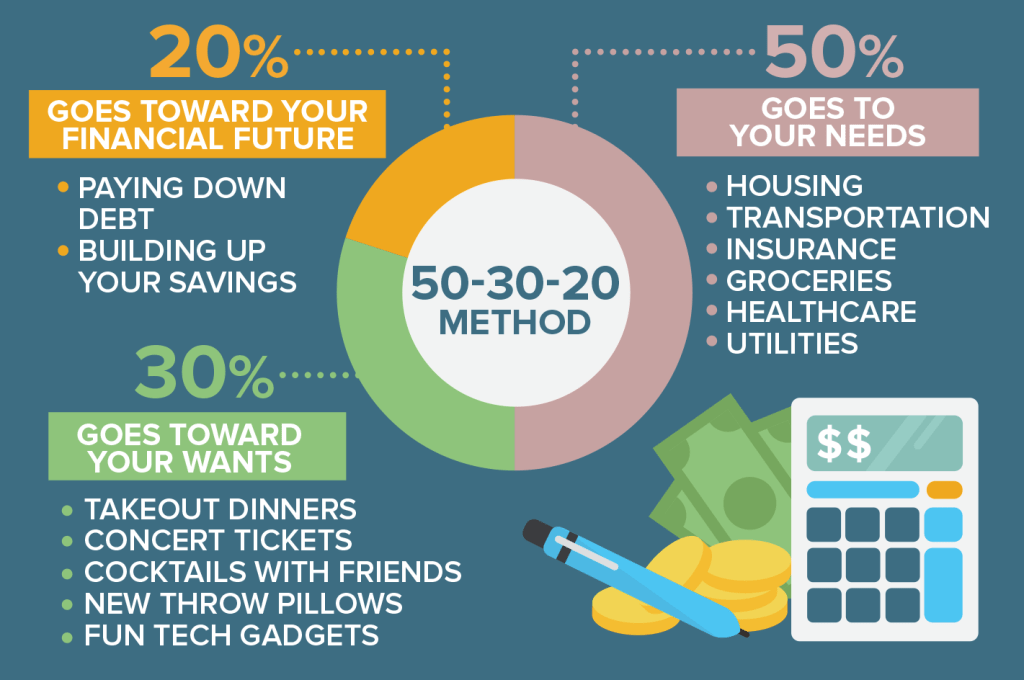
In a nutshell, the 50/30/20 budget is split up into:
- 50% toward primary expenses (“needs” like housing, transportation, and food)
- 30% toward secondary expenses (“wants” like a gym membership, Netflix subscription, or phone plan)
- 20% toward savings or investing
According to this information the couples are invited to fill out the following format taken from the book “One For the Money-Guide to Family Finance” by Elder Marvin J. Ashton.
Conclusion
If a couple has problems with money, the best thing they can do is have an honest conversation. The issue of money is difficult because it can be very emotional. In addition, each person has different ideas on how to manage it.
The truth is that when a couple marries, they have to learn to identify those lessons that affect their perception of how money should be managed. This will allow them to have informed discussions and reach mutual agreements.
Don’t forget to give our opinion in this link. https://byui.az1.qualtrics.com/jfe/form/SV_9SjnPyoBVTZskzX
REFERENCES
CARA, Marriage in the catholic church: a survey of u.s. catholics (2007) p. 100-101.
Dave Ramsey(1992) Financial peace revisited: new chapters on marriage, singles, kids and families
Gillespie BJ, Peterson G. Lever J. (2019). Gendered perceptions of fairness in housework and shared expenses: Implications for relationship satisfaction and sex frequency. PLoS ONE 14(3): e0214204. https://doi.org/10.1371/journal.pone.0214204
How to Make a Family Budget. (2019, April 18). USNews.com. Retrieved from https://link-gale-com.byui.idm.oclc.org/apps/doc/A582875890/STND?u=byuidaho&sid=STND&xid=46ad8224
Kenney, C. T. (2006). The power of the purse: Allocation systems and inequality in couple households. Gender & Society, 20, 354–381.
Money, power and spending decisions in intimate relationships Carolyn Vogler Clare Lyonette Richard D. Wiggins 15 February 2008 https://doi.org/10.1111/j.1467-954X.2008.00779.x
 MARRIAGE FIRST